Community
Five simple ways to make your neighborhood more nature-friendly
You do not need a large project to make a neighborhood more welcoming to plants, insects, birds, and people.

TerraKind Team
Publish Date
Five simple ways to make your neighborhood more nature-friendly
Environmental action can sometimes feel like something that belongs far away: a restoration site, a protected landscape, or a large conservation project.
But nature is also present in the places where people live every day.
A sidewalk, shared garden, schoolyard, courtyard, or small patch of unused land can become part of a healthier local environment. The changes do not need to be dramatic. In many cases, they begin with simple decisions about what we plant, how we maintain outdoor spaces, and how we make room for other forms of life.
Here are five practical ways to start.
1. Make room for native plants
One of the simplest changes is to look at what is already growing around you.
Where appropriate for your region, native plants can provide valuable habitat and food for local wildlife while fitting naturally into the conditions of the area.
You do not need to replace an entire garden.
A small planting area can be enough to begin experimenting with plants that belong to the local landscape.
The important thing is to choose plants suited to your climate, soil, sunlight, and available water.
A small patch of well-chosen plants can be more useful than a larger area filled with species that require constant intervention.
2. Think beyond flowers
When people imagine wildlife-friendly gardens, they often think about colorful flowers.
Flowers are important, but a healthy habitat can offer much more.
Different plants provide different forms of shelter, food, and structure. Ground-level vegetation, shrubs, trees, fallen leaves, and other natural materials can all contribute to a more varied environment.
Instead of trying to make every outdoor space look perfectly tidy, consider leaving some areas slightly more natural.
A garden does not need to look neglected to be welcoming to wildlife.
It simply needs to provide some places where nature can exist without being immediately removed.
3. Rethink unnecessary maintenance
Regular maintenance is useful, but more maintenance is not always better.
Over-cleaning outdoor areas can remove habitat and disturb the natural processes that help soil and plants develop.
That does not mean abandoning a garden.
It means asking a more useful question:
What actually needs to be changed?
Perhaps a section can be allowed to grow a little longer before being cut. Perhaps fallen leaves can remain in selected areas rather than being removed immediately. Perhaps a dead branch can be left where it is safe to do so.
Small adjustments can make maintenance more compatible with nature.
4. Create shared spaces for learning
A nature-friendly neighborhood becomes even more valuable when people understand why the changes are happening.
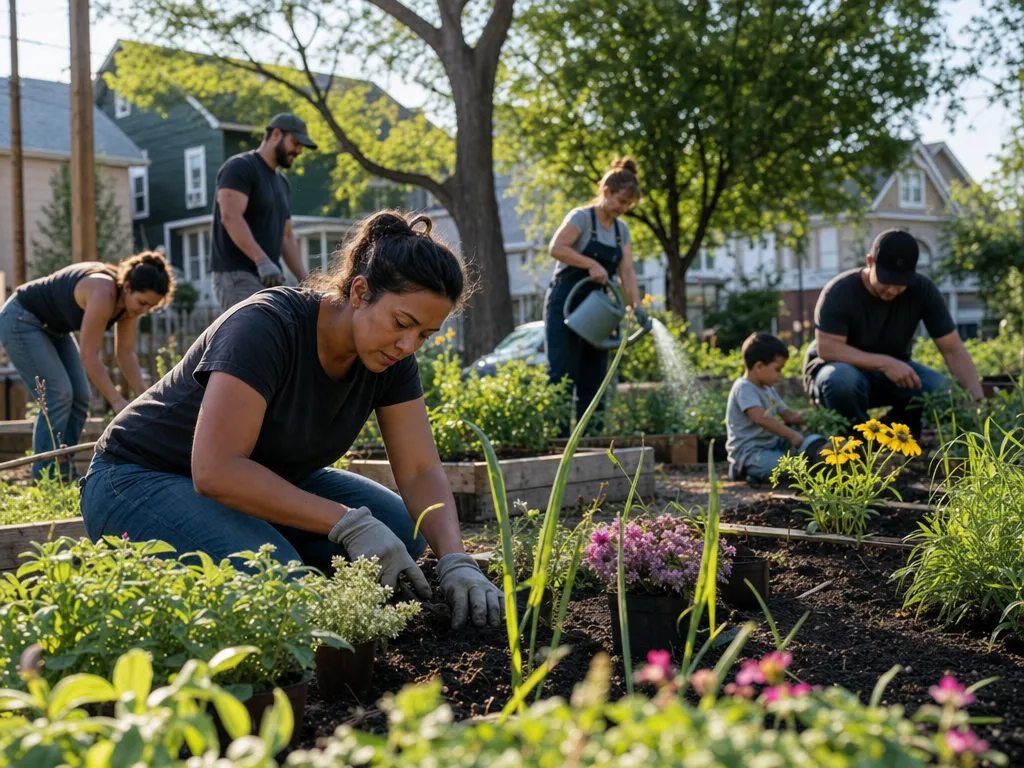
A community garden can become a place for residents to exchange planting knowledge. A schoolyard can become an outdoor classroom. A small planting area can include simple signs explaining which plants are native and what they support.
These experiences make environmental ideas tangible.
Instead of learning about ecosystems only through articles or screens, people can observe seasonal changes directly.
Children can watch plants grow. Neighbors can notice returning insects. Volunteers can see which areas need attention.
Learning becomes part of the landscape.
5. Start with one manageable change
The most useful environmental habit is often the one that can actually be maintained.
You do not need to redesign your entire neighborhood in one weekend.
Choose one area.
Plant a small native garden. Create a community planting day. Make one section more wildlife-friendly. Talk with neighbors about a shared outdoor space.
Then observe what happens.
The next step can come from what you learn.
Nature-friendly does not have to mean complicated
The strongest neighborhood projects are often understandable.
People know what they are doing, why they are doing it, and how they can contribute.
That makes participation easier.
A nature-friendly neighborhood is not necessarily one without buildings, paths, lawns, or busy streets. It is a place where people make room for living systems within the spaces they already share.
The goal is not perfection.
It is connection.
When small patches of habitat appear across a neighborhood, they can become part of a larger local network of green spaces. And when residents begin to see those spaces as something they can care for together, environmental action becomes part of everyday life rather than something reserved for special occasions.