Restoration
What we learn by looking closely at a restored landscape
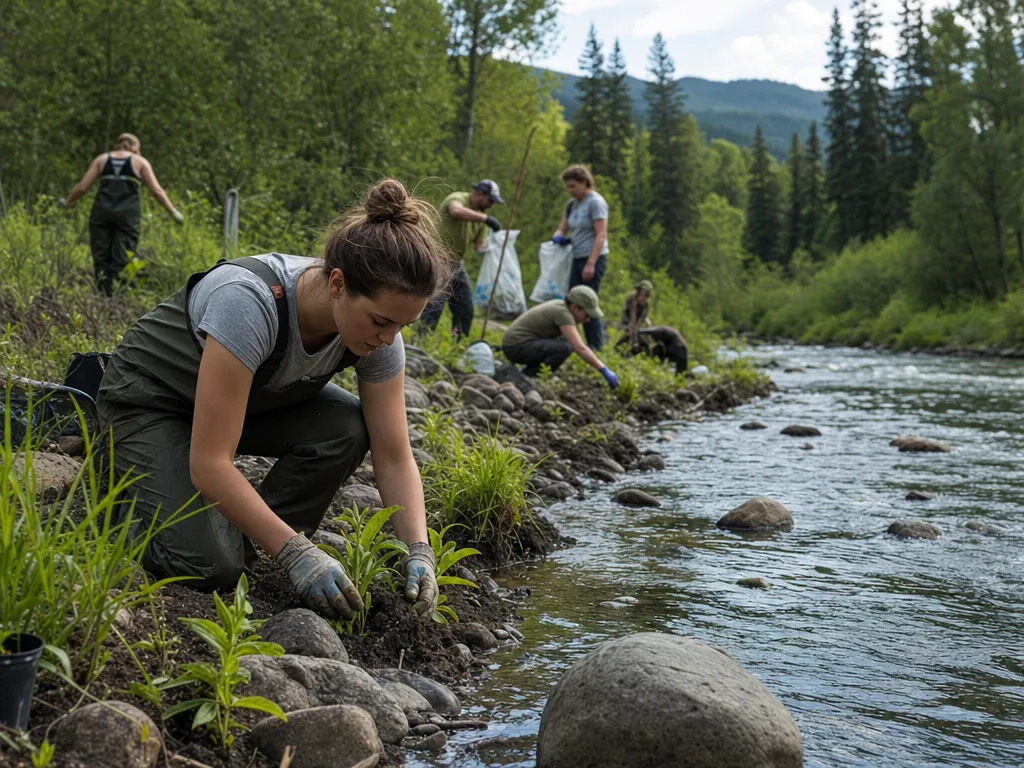
Restoration is an ongoing process of observing change, learning from the landscape, and adjusting the work over time.

TerraKind Field Team
Publish Date

What we learn by looking closely at a restored landscape
Restoration is often photographed at two moments: before the work begins and after visible changes have taken place.
The space between those images is where much of the learning happens.
A restored landscape does not follow a perfectly predictable path. Plants respond to weather. Soil conditions vary. Some species establish quickly while others take longer. Areas that looked similar at the beginning can develop very differently.
This is why observation is such an important part of restoration.
The landscape gives feedback
Every restoration site has something to teach.
A newly planted area might reveal that one section holds more moisture than expected. A group of plants might establish particularly well in one part of the site. Another area might need additional protection or a different planting approach.
These observations are not failures.
They are information.
Restoration becomes stronger when teams are willing to use that information to make the next decision.
Look at more than the plants
It is easy to focus on whether newly planted vegetation is growing.
But a landscape contains many signals.
Look at the soil.
Look at water movement.
Look at shade and sunlight.
Look at signs of wildlife.
Look at how people move through the space.
Look at which plants appear without being introduced.
Each observation adds another piece to the picture.
The more complete that picture becomes, the more carefully future work can be planned.
Change can be subtle
Not every positive change is immediately dramatic.
A previously bare area may slowly develop ground cover. Small plants may appear beneath larger vegetation. A shaded section may begin to hold moisture differently. People may start using a restored path or visiting an area they previously ignored.
These changes can be easy to overlook because they happen gradually.
That is why returning to the same place matters.
A single visit captures a moment.
Repeated observation reveals a process.
Good restoration includes room for uncertainty
There is a temptation to design a restoration project as if every outcome can be predicted in advance.
In reality, living systems are complex.
Plans provide direction, but observation provides feedback.
A thoughtful restoration team can therefore work with a clear intention while remaining flexible about how the work develops.
That might mean changing the timing of planting, adjusting maintenance, protecting an area that is regenerating naturally, or choosing a different approach for a difficult section of the site.
Flexibility is not a lack of planning.
It is a response to what the landscape is showing.
Documentation makes learning easier
Simple documentation can be surprisingly valuable.
Photographs taken from the same location can reveal gradual changes. Notes about seasonal conditions can help explain why a planting area developed differently from another. Observations from volunteers can capture details that formal monitoring might miss.
Documentation also helps communicate the process to people who were not there at the beginning.
Instead of showing only a finished landscape, teams can show how the place changed.
That makes restoration easier to understand.
The goal is not to force a landscape into one image
A restored ecosystem does not need to look perfectly designed.
Natural environments contain variation.
Some areas are dense. Others are open. Some plants thrive while others disappear. Water changes the character of a place from season to season.
Restoration is therefore less about producing a fixed visual result and more about creating conditions where a healthier system can develop.
That requires patience.
It also requires humility.
The landscape will always teach us something that was not included in the original plan.
Keep looking
Perhaps the most practical restoration habit is also the simplest:
Return and look again.
Notice what changed.
Notice what did not.
Ask why.
Then use what you learned to decide what comes next.
Restoration is not a single action followed by a finished result.
It is an ongoing relationship with a place.
The more closely we observe that relationship, the better equipped we become to care for the landscape in thoughtful and lasting ways.