Education
Why healthy soil matters more than we can see
Soil is easy to overlook, but the ground beneath a landscape plays a central role in how plants, water, and ecosystems function.

TerraKind Ecology Team
Publish Date

Why healthy soil matters more than we can see
When we look at a landscape, we usually notice what is above the ground.
Trees.
Grass.
Flowers.
Water.
Birds.
But underneath all of that is another living system that is much easier to overlook.
Soil supports roots, stores water, contains organic matter, and provides habitat for an enormous range of organisms. Its condition influences what can grow and how a landscape responds to changing conditions.
For restoration work, paying attention to soil is therefore essential.
Soil is more than dirt
The word “soil” can make the ground beneath our feet sound like an inactive material.
It is not.
Healthy soil contains mineral particles, organic material, water, air, roots, and living organisms. These components interact continuously.
Roots grow through it.
Water moves through it.
Organic material breaks down within it.
Microorganisms contribute to the processes that make nutrients available to plants.
A healthy soil system is active even when there is very little happening visibly above the surface.
Disturbance changes the ground
Soil can be affected by construction, repeated foot traffic, removal of vegetation, erosion, intensive maintenance, and other forms of disturbance.
One common result is compaction.
When soil becomes heavily compacted, the spaces between particles can change, affecting how air and water move through the ground. Plant roots may also find it harder to establish.
This is one reason restoration sometimes needs to begin below the visible landscape.
Planting into poor conditions without understanding the soil may produce disappointing results.
Water and soil are connected
The movement of water through a landscape is closely related to soil condition.
Healthy soil can provide spaces through which water moves and can support vegetation that helps hold the landscape together.
When soil is degraded or exposed, water can behave differently.
Rain may move quickly across the surface instead of entering the ground. Bare areas can become vulnerable to erosion. Soil can be carried away from places where it is needed.
Restoration therefore needs to consider the relationship between vegetation, soil, and water rather than treating each element separately.
Plants help build better conditions
Plants and soil influence each other.
Roots create pathways through the ground. Fallen leaves and other organic material eventually return nutrients to the soil. Vegetation can protect the surface from direct exposure and help reduce erosion.
This creates an important cycle.
Healthy vegetation can support healthier soil conditions, while healthier soil can support stronger vegetation.
Restoration often works best when it encourages this relationship rather than relying only on repeated external inputs.
Sometimes the best intervention is less intervention
Not every piece of damaged soil needs to be completely rebuilt.
In some situations, reducing disturbance and allowing natural processes to resume may be appropriate.
That might mean limiting unnecessary foot traffic, leaving organic material in place, protecting existing vegetation, or giving a recovering area time to develop.
The right approach depends on the site.
There is no single soil-restoration recipe that works everywhere.
Observation comes first.
Look down
One simple way to become more aware of soil is to stop treating it as background.
Look at whether the ground is covered or exposed.
Notice where water collects.
Observe where plants grow easily and where they struggle.
Look for areas where soil is being carried away.
Pay attention to places where people or vehicles repeatedly pass.
These observations can reveal relationships that are otherwise easy to miss.
Healthy landscapes begin beneath our feet
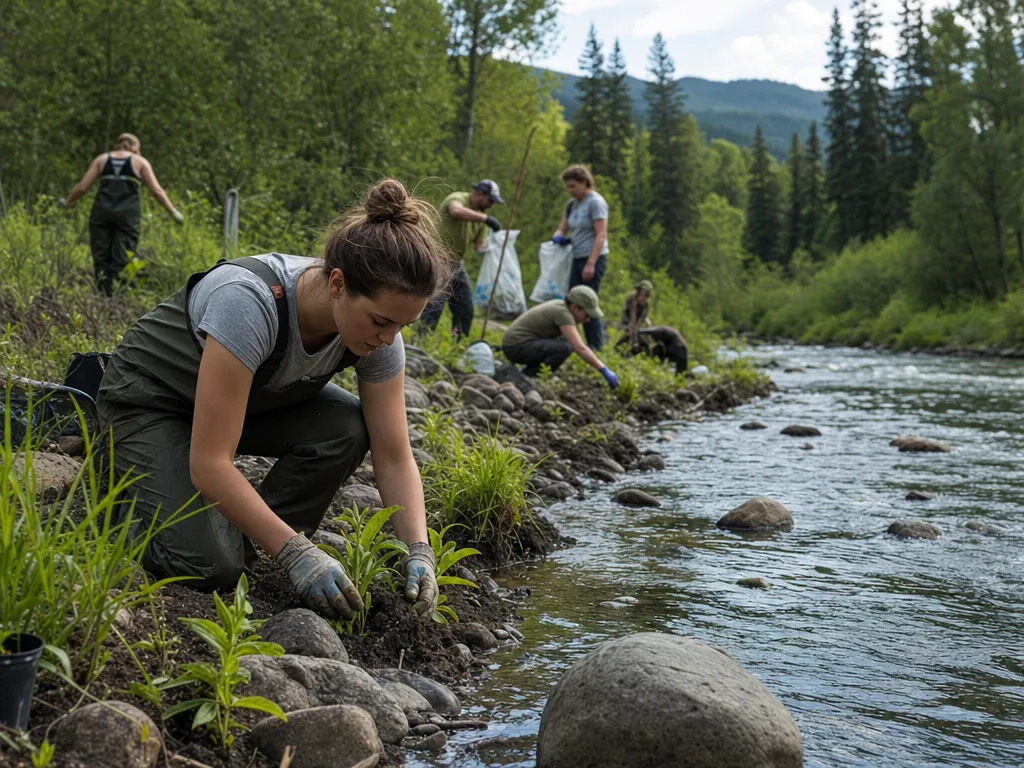
Restoration is often represented by visible images of planting, rivers, forests, or wildlife.
Those images are important.
But much of the foundation is hidden.
Soil supports the plants that create habitat. Plants influence water movement. Water affects soil. People affect all of these systems through how they use and care for the land.
Understanding those connections changes the way we think about restoration.
Instead of asking only, “What should we plant here?” we can ask a broader question:
“What conditions will help this place become healthier over time?”
Sometimes the answer begins with the ground beneath our feet.